Switchgear · 7 min · reviewed Oct 2026
MCB vs RCCB vs RCBO: what's the difference, and which do you need?
Short answer
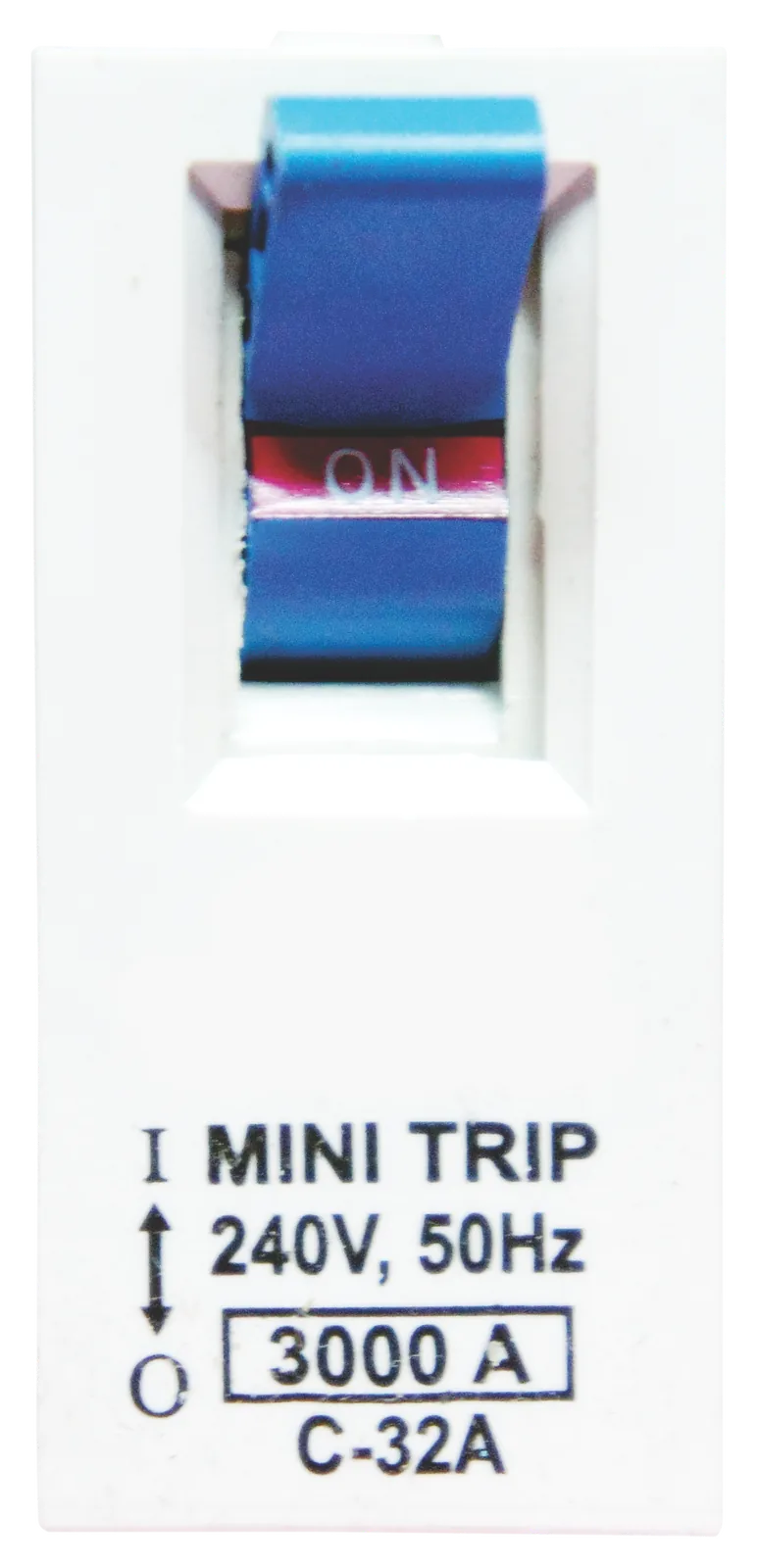
An MCB (miniature circuit breaker) protects wiring from overload and short circuit. An RCCB (residual current circuit breaker) protects people from electric shock and reduces fire risk by tripping when current leaks to earth — typically at 30 mA — but it does not protect against overload or short circuit. An RCBO does both in one device. Most homes need an RCCB plus an MCB on every circuit.
हिंदी में
MCB और RCCB में क्या फर्क है?
MCB ओवरलोड और शॉर्ट सर्किट से तारों को बचाता है। RCCB करंट के अर्थ में लीक होने पर (आमतौर पर 30 mA) ट्रिप होकर लोगों को झटके से बचाता है, पर ओवरलोड से नहीं। RCBO दोनों काम करता है। घर में RCCB और हर सर्किट पर MCB — दोनों लगाएँ।
MCB tripping curves: B, C and D
RCCB sensitivity
- 30 mA — personal protection against shock. The usual choice for homes, bathrooms and outdoor circuits.
- 100 mA / 300 mA — fire and equipment protection, used upstream of 30 mA devices in larger installations.
- Type AC detects normal AC leakage. Type A also detects pulsating DC leakage from modern electronics, inverters and EV chargers.
- Press the test (T) button about once a month to make sure it trips.
Typical MCB and wire pairings for homes
Standards to look for
- MCB: IS/IEC 60898-1
- RCCB: IS 12640-1
- RCBO: IS 12640-2
Questions people also ask
- Do I need both an MCB and an RCCB? +
- Yes. The RCCB protects people from earth-leakage shocks; MCBs protect each circuit's wiring from overload and short circuits. An RCCB alone will not trip on an overload.
- Which MCB is used for a 1.5 ton AC? +
- Commonly a 16 A or 20 A C-curve MCB with 2.5–4 sq mm copper wire, depending on the AC's rated current and the cable run.
- Why does my RCCB keep tripping? +
- Usually an appliance or wiring fault is leaking current to earth — often a geyser element, a damp junction box or an old appliance. Unplug circuits one by one to find it, and have an electrician check it. Don't bypass the RCCB.
- Is an RCBO better than an RCCB + MCB? +
- An RCBO gives each circuit its own earth-leakage protection, so one fault doesn't switch off the whole house. It costs more per circuit; many homes use one RCCB for groups of circuits and RCBOs for high-risk ones.
General guidance only — follow IS 732 and your local electrical rules, and use a licensed electrician.